April 29, 2026 • Articles • Blog • Finding Your Path
Success Without College: What Young People Actually Need to Hear
Nobody is going to tell you this at graduation. Your counselors won’t say it. Your parents may not believe it. And the culture around you has been quietly reinforcing the opposite idea for most of your life. So let me be direct: college is not the only path to a successful, fulfilling, financially stable life. Not even close.
But here’s the part that usually gets left out of that statement. Success without college is absolutely possible, and it is also absolutely not automatic. It requires something that a diploma alone was never going to provide anyway: a clear picture of where you’re going and the discipline to keep moving toward it.
That’s what this is really about. Not rejecting college. Rejecting drift.
Success Is Not a Diploma. It’s a Destination.
For generations, the conventional wisdom was simple. Get the degree, get the job, build the life. And for a lot of people, that path worked reasonably well. But it never worked because of the diploma itself. It worked when it led people toward skills, opportunities, and work they found meaningful. The diploma was a vehicle. The destination was always the real point. No degree is required for comfort, peace, and freedom. What is required is knowing what those things look like for you.
Success is not a credential. It’s a life. The income that lets you sleep soundly. The schedule that gives you time for what matters. The work you’re proud to do and the people you’re proud to provide for. Some people build that through college. A lot of people build it another way entirely. What separates the people who get there from the people who don’t isn’t the institution. It’s the intention.
If You Can’t Picture Success, You’ll Struggle to Reach It
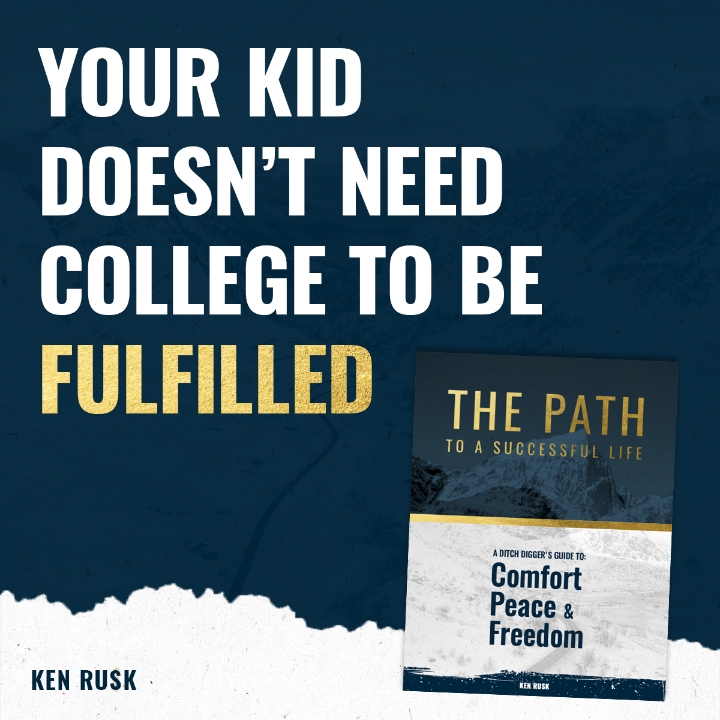
This is the step most young people skip, and it’s the one that costs them the most. Before you can work toward something, you have to know what that something actually is. Not a vague idea of someday. A real picture. The Path to a Successful Life starts with crafting and visualizing exactly what you want, because you cannot make decisions that point you in the right direction if you have no idea what direction that is.
What does a good life look like for you, specifically? Is it owning a business? Running a crew? Having a trade that keeps your schedule flexible? Building something physical you can point to? Earning enough to take care of your family without anxiety? Retiring early because you started building equity in your twenties instead of paying off student loans in your thirties?
Those aren’t small questions. But they’re the right ones to ask before you make a major decision about your next step. If you can answer them clearly, you have something to aim at. If you can’t yet, that’s the work to do first.
College Is One Path. Not the Only Path.
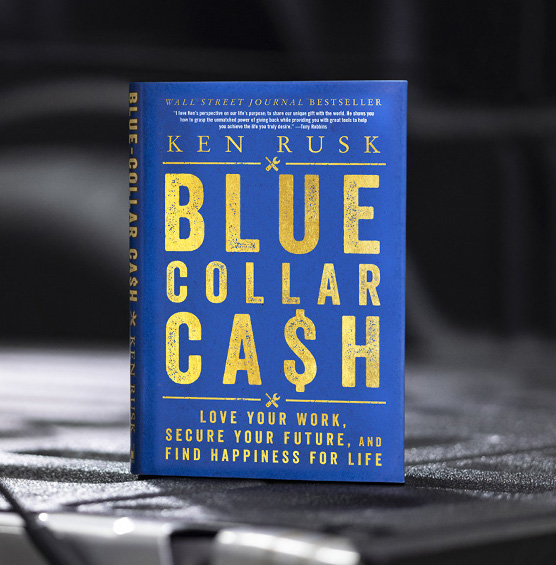
Let’s be fair about this, because the article should be. College is the right call for certain careers and certain people. If you want to be an engineer, a physician, or a lawyer, a degree isn’t optional. Some fields genuinely require it, and for those fields, the investment often makes sense. Blue Collar Cash doesn’t argue that college is broken. It argues that it isn’t the universal answer it’s been sold as, especially when the cost has grown far faster than the wages it produces.
What’s changed in recent years is that the alternatives have become harder to ignore. Trade school programs that cost $5,000 to $25,000 total are producing graduates who enter the workforce in under two years with minimal debt and real, marketable skills in fields with serious labor shortages. Apprenticeships pay you while you learn. Certification paths in HVAC, electrical work, plumbing, and construction lead directly to incomes that compete with, and in many cases exceed, what common four-year degrees produce.
The question isn’t whether college is good or bad. The question is whether it’s the right tool for the specific life you’re trying to build.
Success Without College Still Requires Hard Work
This matters and it’s worth saying plainly. There is no version of this conversation that ends with skip the hard part. The people who build real success outside of college, or inside it for that matter, are the ones willing to do the work, stay consistent, and keep showing up when the motivation fades. The get-rich-quick myth is exactly that: a myth. There is no shortcut to a life built on real skill and real trust.
What skipping college does is remove a specific kind of cost and delay. It does not remove the requirement to earn your place through effort and capability. An electrician who half-learns their trade doesn’t build a strong business. A plumber who doesn’t communicate well or follow through on commitments doesn’t get referrals. The trades reward the same things every other serious field rewards: reliability, knowledge, and the willingness to keep getting better.
If you’re looking for easy, this isn’t it. If you’re looking for real, this absolutely is.
Clear Goals Turn Effort Into Progress
Hard work without direction is just exhausting. The difference between someone who grinds for years without getting anywhere and someone who makes steady, visible progress toward the life they want is usually not ability. It’s focus. The advantages of goal setting aren’t motivational, they’re practical. Clear goals change the decisions you make, the opportunities you notice, and the actions you actually take on any given day.
When you know what you’re building toward, a job offer means something different. A chance to learn a new skill means something different. A setback means something different. You have a frame to evaluate things against. Without that frame, most people default to reacting instead of deciding, and reacting tends to move you sideways rather than forward.
The goal doesn’t have to be perfectly defined right now. But it needs to be real, specific enough to guide a decision, and honest enough to survive contact with reality. Setting good goals is not about dreaming big. It’s about pointing yourself somewhere real and then taking the first step toward it.
Practical Skills Can Build a Strong Life
There’s a reason trade school enrollment has been climbing. Young people are doing the math, and what they’re finding is that two years of focused training in a skilled trade can produce better early-career financial outcomes than four years of generalized study, especially when you factor in debt. The trades aren’t a backup plan. They’re a legitimate first choice for a growing number of people who want to build something real.
Practical skills create confidence in a specific and durable way. When you know how to do something well, something that people need and will pay for, you have a foundation that doesn’t depend on anyone else deciding you’re worth hiring. You know what you can do. Employers know what you can do. Customers know what you can do. That clarity has real value, especially early in a career when you’re still figuring out where you fit.
The other piece that often goes unsaid is that skilled trades create ownership paths. A worker becomes a journeyman, a journeyman becomes a lead, a lead becomes an owner. That ladder exists and a lot of people have climbed it. It doesn’t require a degree. It requires skill, reputation, and the willingness to keep growing.
Steady Progress Beats Social Pressure
A lot of young people end up in college not because they’ve decided it’s the right move, but because it feels like the move everyone expects. Friends are going. Parents expect it. The school system treated it as the obvious next step. So they go, without a clear idea of what they’re going for. And some of them figure it out and build something meaningful. Others graduate with a degree in something they don’t love, debt they didn’t expect, and no clearer sense of direction than when they started. The path that helps you build the life you actually want is not the one you default into. It’s the one you choose intentionally.
Social pressure doesn’t slow down after high school. It just changes shape. In your twenties, it looks like comparison. Who got the salary offer. Who bought a house first. Who has the title that sounds impressive. None of that is a reliable indicator of progress toward your specific goals. Measuring your path against someone else’s is a good way to lose track of your own.
Steady progress toward a clearly defined destination is worth more than fast movement in the wrong direction. That’s true whether you’re eighteen or thirty-five.
Questions Worth Asking Before You Choose Your Next Step
Before you commit to a path, any path, these are the questions worth sitting with. Choosing a career path starts with honest self-assessment, and that means asking the things most people avoid:
- What kind of life do I want to build, and what does it actually look like day to day?
- What am I genuinely good at, and what kind of work makes me want to keep getting better?
- Do I want to take on significant debt before I know what direction I’m heading?
- What path gives me the best combination of skill development, income potential, and future opportunity?
- What does success look like for me five or ten years from now, and which next step moves me closer to that picture?
There’s no universal right answer to any of those questions. But the person who has thought them through is in a fundamentally different position than the person who hasn’t. One is choosing. The other is following.
Success Without College Is Possible. But It Has to Be Intentional.
The whole point of this conversation is not to talk anyone out of college. It’s to make sure that whatever you choose, you’re choosing it, not just going along with the momentum around you. Success without a degree is real. It happens every day, through skilled trades, through entrepreneurship, through building a reputation for useful work in a field that needs it. But it doesn’t happen by accident.
What it takes is the same thing that produces any real outcome: a clear vision of where you’re going, goals specific enough to guide your decisions, and the willingness to work steadily toward both even when the progress is slow and the path feels longer than you expected.
That combination, vision, goals, and consistent effort, doesn’t require a degree. It requires a decision. If you’re ready to make it, that’s where everything starts.